
WatchIQ
PatekPhilippe
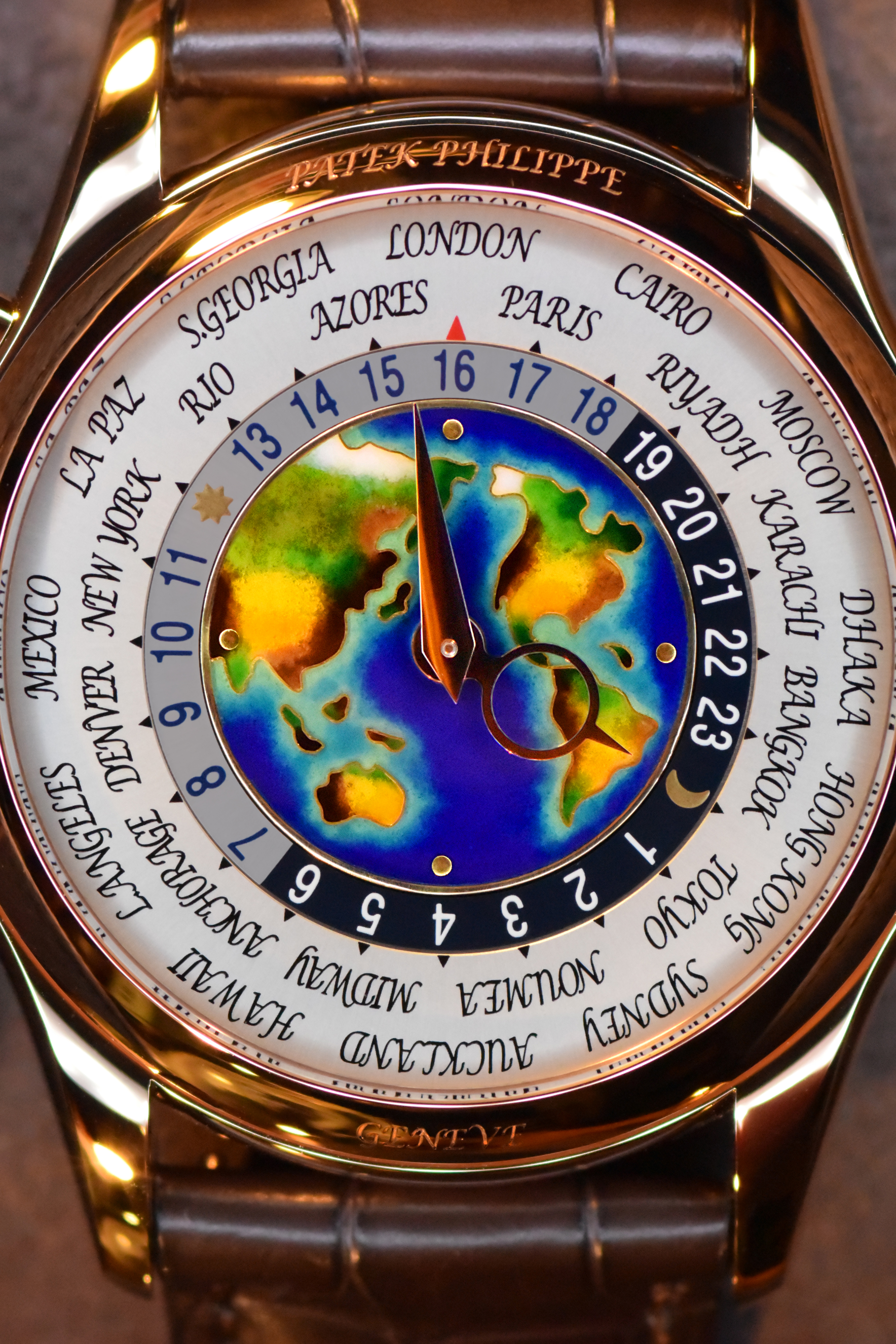
Patek Philippe Complications World Time Cloisonné Enamel 5131J-001
Market Estimate
~$125,000
Specifications
Market Range
PatekPhilippe
Patek Philippe Complications World Time Cloisonné Enamel 5131J-001
Market Estimate ~ $125,000
Market Range
Specifications
Executive Overview
The Patek Philippe Reference 5131J stands as a pinnacle of horological artistry, merging the technical complexity of a world time complication with the rare craft of Grand Feu cloisonné enameling. While the standard World Time models are celebrated for their utility, the 5131 series is coveted for its dial—a hand-painted miniature map of the Americas, Europe, and Africa. Because each dial is individually fired by master artisans, no two examples are identical, effectively making every piece a unique work of art. This specific reference in yellow gold (5131J) represents the first iteration of this modern legend, introduced to bridge the gap between Patek’s mid-century heritage and contemporary high-end collecting. It exists not merely as a tool for the global traveler, but as a trophy for those who appreciate the 'Metiers d'Arts'—the rare handcrafts that Patek Philippe has fought to preserve. Collectors target the 5131 specifically because of its limited production numbers; the failure rate during the enamel firing process is high, ensuring that supply never meets the global demand. It is a watch that commands respect in any room, representing the absolute intersection of fine jewelry and superlative mechanical engineering.
Technical Architecture
At the heart of the 5131J is the ultra-thin self-winding Caliber 240 HU (Heure Universelle). This movement is a masterpiece of spatial efficiency, utilizing a 22k gold micro-rotor recessed into the plate to maintain a slim profile despite the complexity of the world time module. The mechanism allows the wearer to see the time in all 24 time zones simultaneously via a rotating city ring and a 24-hour ring divided into day and night segments. The case is crafted from solid 18k yellow gold, featuring the signature 'Patek Philippe' and 'Genève' engravings on the bezel—a design choice unique to the 5131 and 5231 series that distinguishes them from the printed bezels of the 5130. The cloisonné enamel center is created by forming thin gold wires (cloisons) into the shapes of the continents and filling the voids with various colors of enamel paste before multiple firings in an oven at temperatures exceeding 800 degrees Celsius. Protecting this delicate work is a scratch-resistant sapphire crystal, while the case back is also sapphire to exhibit the Poinçon de Genève or Patek Philippe Seal finishing on the movement. The watch is presented on a hand-stitched alligator strap with a matching 18k yellow gold deployment clasp.
Historical Context
The history of the Patek Philippe World Time dates back to the 1930s and the invention of the 'Heure Universelle' mechanism by independent watchmaker Louis Cottier. Patek Philippe adopted this system for legendary references like the 1415 and 2523, the latter of which frequently breaks records at auction today. After a long hiatus, the brand reintroduced the complication in 2000 with the 5110, followed by the larger 5130. However, it was the 2008 release of the 5131 that truly captured the imagination of the world’s elite collectors. By reintroducing the cloisonné enamel center—a feature found on the most expensive vintage Patek Philippes—the brand connected its modern catalog directly to its golden age of 'Metiers d'Arts'. The 5131J was the first of the series, eventually followed by versions in white gold (G), rose gold (R), and platinum (P), each featuring different maps. This specific yellow gold model is considered the 'purest' expression of the revival, harkening back to the classic aesthetic of the 1950s world timers that defined the era of glamorous transcontinental travel.
Market Intelligence
From an investment perspective, the Patek Philippe 5131J is a blue-chip asset. Unlike standard production models, the 5131 was never officially listed in the general catalog with high availability; it was an 'application piece,' meaning buyers had to be vetted and approved by Patek Philippe headquarters in Geneva. This artificial scarcity, combined with the genuine difficulty of production, has created a robust secondary market. While the broader watch market experiences volatility, the 5131J has maintained a high floor due to its artisanal nature. It occupies a specific niche where it is valued as much for its 'art' as for its 'horology.' Demand remains consistently high in Asian and Middle Eastern markets, where the yellow gold and enamel combination is highly prized. Long-term value retention is bolstered by the fact that Patek Philippe has transitioned the reference to the 5231, making the 5131 a closed chapter in the brand's history. As a discontinued model with a hand-made dial, its supply is fixed, while the global pool of ultra-high-net-worth collectors continues to expand, suggesting a positive long-term price trajectory.
More from PatekPhilippe
View all →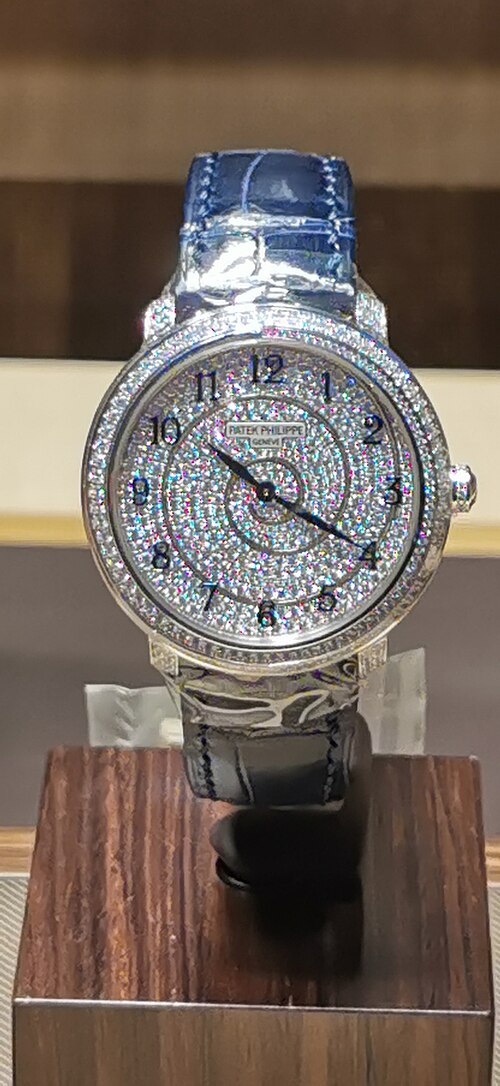
Patek Philippe Calatrava Diamond Ribbon Joaillerie 4978/400G
$178,500 - $241,500
.jpg.jpg)
Patek Philippe Complications Annual Calendar 4947R-001
$44,200 - $59,800
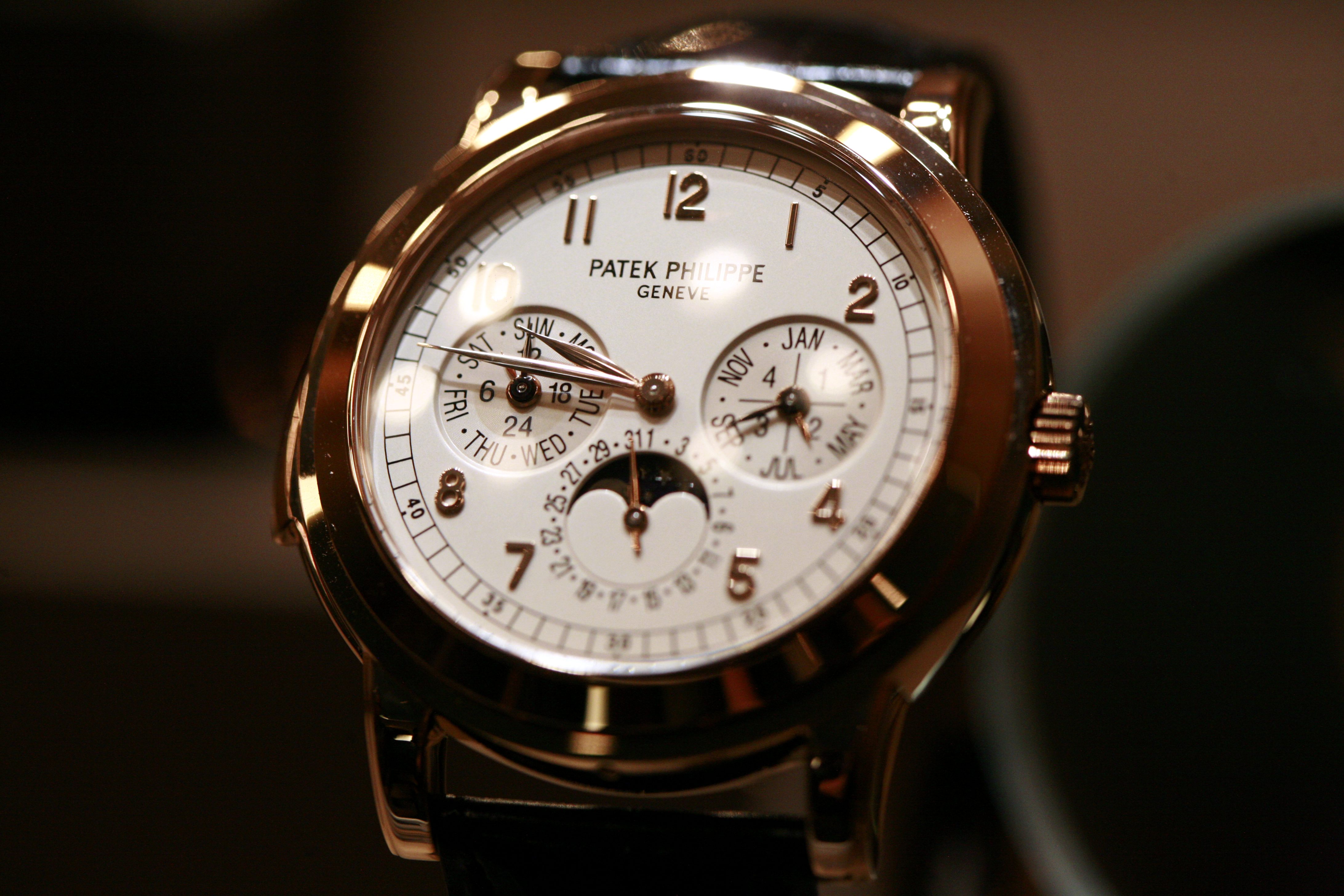
Patek Philippe Grand Complications Perpetual Calendar 5139R-001
$46,750 - $63,250
.jpg.jpg)
Patek Philippe Grand Complications Perpetual Calendar 5327R-001
$78,625 - $106,375