WatchIQ
Omega
Omega Vintage Calibre 266 (30mm Family)
Market Estimate
~$850
Specifications
Market Range
Omega
Omega Vintage Calibre 266 (30mm Family)
Market Estimate ~ $850
Market Range
Specifications
Executive Overview
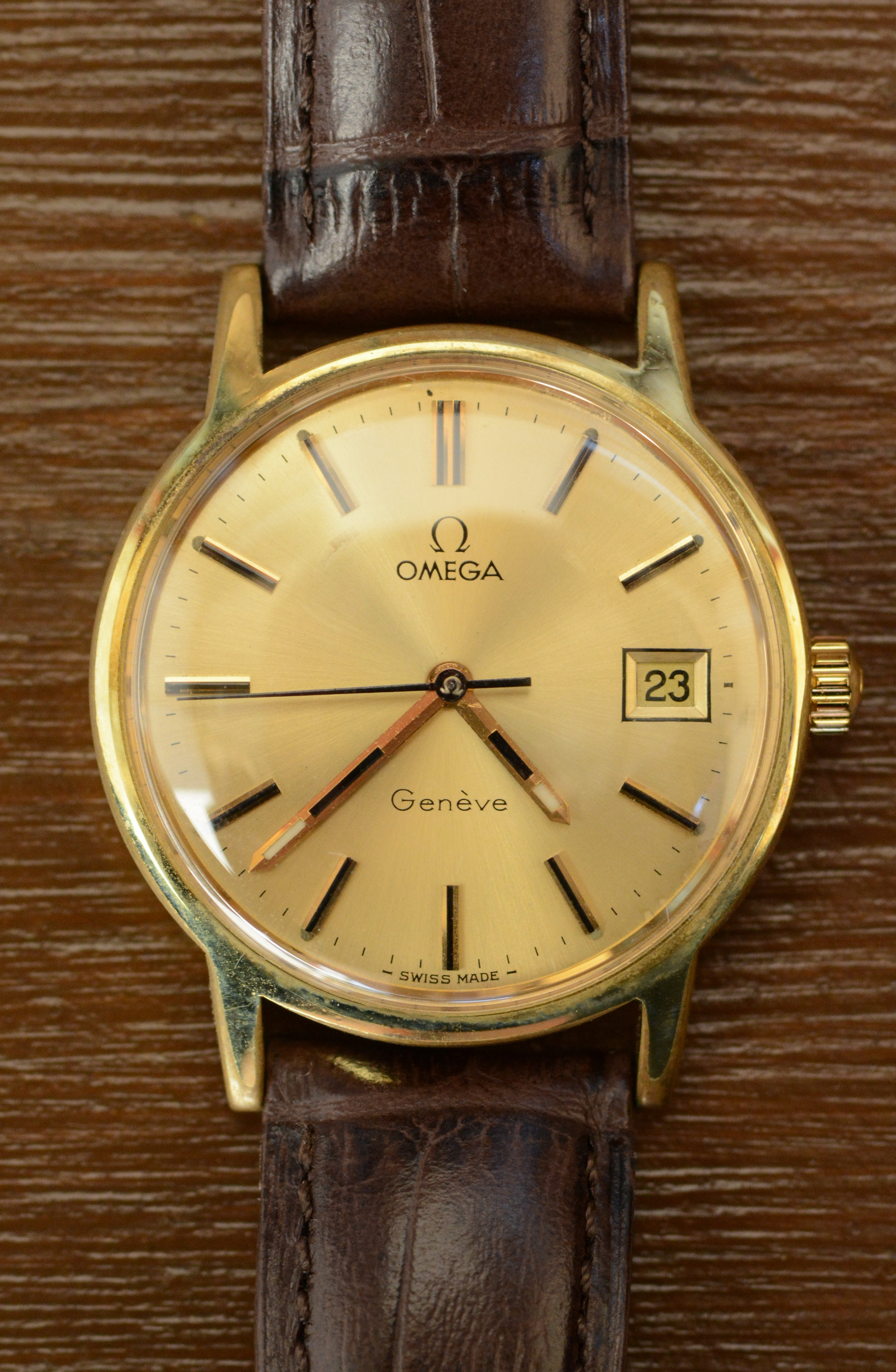
The Omega Calibre 266 represents a pinnacle of mid-century Swiss horology, descending directly from the legendary 30mm movement family that solidified Omega’s reputation for chronometric excellence. This specific timepiece is a quintessential example of the post-war era, where utility met elegance. While many modern collectors focus on the Speedmaster or Seamaster professional lines, the manual-wind dress watches of the 1950s provide the foundational DNA of the brand. This model is highly regarded by enthusiasts for its 'oversized' 30mm movement architecture, which allowed for a larger balance wheel and superior timekeeping stability compared to its contemporaries. The aesthetic is defined by a clean, understated design language that focuses on legibility and slim proportions, making it a versatile choice for modern formal wear. Collectors value these pieces not just for their aesthetic charm, but for the robust engineering that allows them to remain functional and accurate seven decades after their initial assembly. As an entry point into high-quality vintage horology, few references offer the same blend of brand prestige, mechanical integrity, and historical significance as an Omega powered by the 266 movement. It serves as a testament to a time when Omega was competing at the highest levels of observatory trials, bringing that precision technology to the civilian market.
Technical Architecture
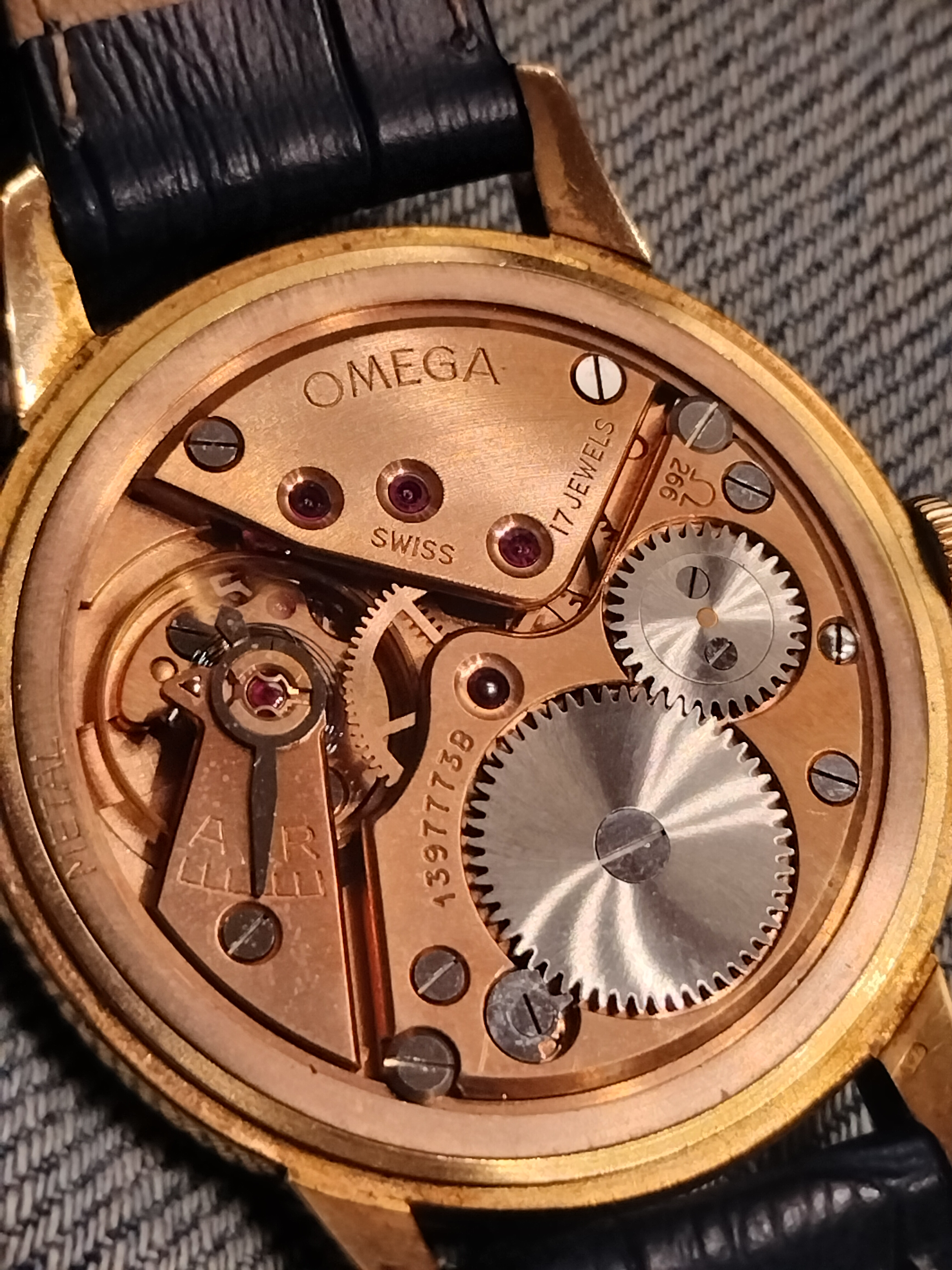
At the heart of this timepiece lies the Omega Calibre 266, a 17-jewel manual-wind movement that evolved from the famous Calibre 30T2. The architecture is characterized by its copper-finished bridges and plates, a signature of Omega's mid-century production that offered both corrosion resistance and a distinctive luxury aesthetic. Technically, the 266 operates at a frequency of 18,000 vibrations per hour (2.5 Hz) and features a power reserve of approximately 45 hours. The movement utilizes a sub-second complication at the 6 o'clock position, a layout enabled by the specific gear train arrangement of the 30mm series. The case construction typically features a snap-on or screw-down back, often in gold-plated or gold-filled brass to provide the look of solid gold at a more accessible price point. The crystal is an acrylic hesalite, which can be polished to remove scratches, maintaining the vintage warmth of the dial. The movement shown exhibits a serial number in the 13 million range, confirming a production date in the early to mid-1950s. The regulation is handled by a traditional index regulator, and the Incabloc shock protection system integrated into the balance cock ensures the watch can withstand minor impacts, a significant advancement for the era.
Historical Context
The story of this watch begins in 1939 with the launch of the 30mm movement series designed by Henri Kneuss. This movement family was revolutionary because it maximized the available space within a standard case to house the largest possible balance wheel, significantly improving the moment of inertia and, consequently, timekeeping precision. During World War II, this architecture was so reliable that Omega became the largest supplier of watches to the British Ministry of Defence. The Calibre 266, introduced around 1950, was a refined iteration of this war-tested technology. It represents the golden age of Omega, a period when the brand was synonymous with precision records at the Kew-Teddington and Geneva observatories. This model sits historically between the utilitarian military pieces of the 1940s and the more flamboyant, automatic-driven designs of the late 1960s. It reflects the social shift of the 1950s toward 'gentleman's watches'—pieces that were thinner, more elegant, and intended for the burgeoning professional class. The 266 series eventually gave way to the 500-series automatics, marking the end of the dominance of manual-wind movements in Omega's primary catalog, which makes these specific references a finite link to the brand's hand-wound heritage.
Market Intelligence
From an investment perspective, the Omega Calibre 266 is classified as a 'blue-chip' entry-level vintage asset. While it does not experience the explosive price volatility of the 'Moonwatch' or the 'Ed White' Speedmasters, it maintains a remarkably steady appreciation curve. Demand is driven by a global collector base that prizes the reliability of the 30mm movements; parts are still relatively abundant, making maintenance viable and supporting long-term value. The secondary market shows high liquidity, as these pieces are perpetually sought after by new collectors entering the vintage space. Supply is moderate; while many were produced, finding examples with well-preserved cases and original, un-refinished movements is becoming increasingly difficult. The brand strength of Omega acts as a safety net for value retention, ensuring that even in a cooling market, these pieces hold their floor price. As modern luxury watch prices continue to escalate, the value proposition of a mid-century Omega becomes more attractive, potentially leading to a gradual upward revaluation. Investors should focus on movement cleanliness and the absence of heavy polishing on the lugs to ensure maximum future return.
.jpg.jpg)