WatchIQ
Longines
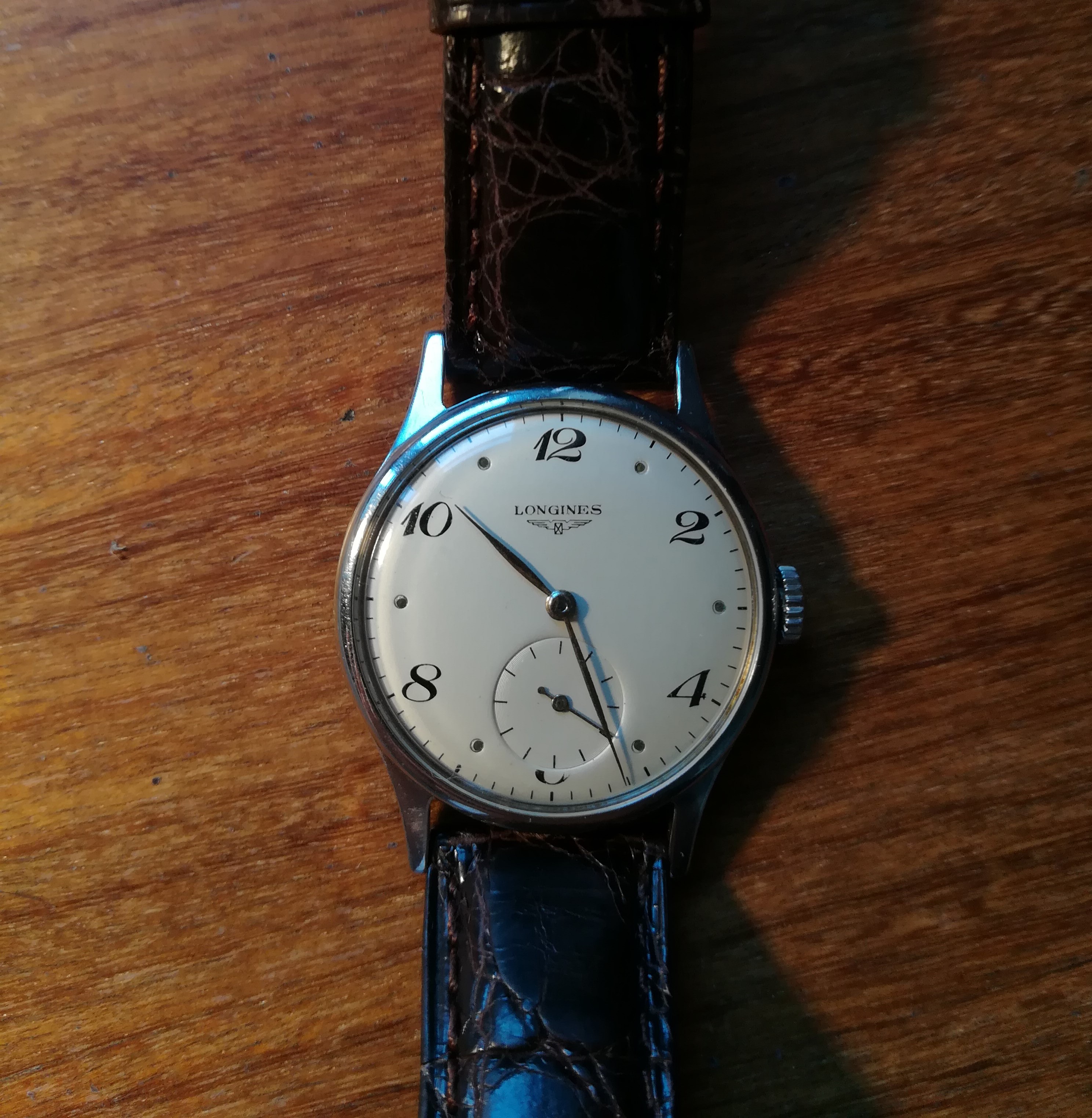
Longines Vintage Calatrava-style Small Seconds (Ref. 6263 / 12.68Z)
Market Estimate
~$1,450
Specifications
Market Range
Longines
Longines Vintage Calatrava-style Small Seconds (Ref. 6263 / 12.68Z)
Market Estimate ~ $1,450
Market Range
Specifications
Executive Overview
The Longines Vintage Small Seconds, often referred to by collectors as a 'Calatrava-style' timepiece, represents the pinnacle of mid-century Swiss elegance and mechanical utility. During the 1940s and 1950s, Longines was positioned as a direct competitor to the likes of Omega and even Patek Philippe in terms of movement finishing and chronometric performance. This specific model features a clean, silvered dial with evocative Breguet-style or stylized Arabic numerals, a hallmark of post-war sophistication. Its existence is a testament to an era where a watch was an essential tool for the gentleman, designed to be both understated under a suit cuff and robust enough for daily use. Collectors gravitate toward these pieces because they offer a pure horological experience: a high-grade manual wind movement, a perfectly proportioned steel case, and a dial layout that prioritizes legibility and golden-ratio aesthetics. In the current market, these vintage Longines models are highly sought after as they represent 'affordable' vintage excellence, providing the charm and history of a legacy brand without the prohibitive entry costs of contemporary luxury sports watches. The winged hourglass logo on the dial serves as a reminder of the brand's status as the oldest registered trademark for a watchmaker, adding a layer of historical pedigree that few other brands can claim.
Technical Architecture
At the heart of this timepiece lies the legendary Longines Caliber 12.68Z, a manual-wind movement renowned for its durability and ease of service. This movement architecture features a large balance wheel and a traditional bridges layout that reflects the high standards of Saint-Imier watchmaking from the mid-20th century. The case is constructed from high-grade stainless steel, typically measuring between 33mm and 35mm, which was the standard 'jumbo' or 'large' size for the era. The construction utilizes a snap-back or screw-down case design depending on the specific reference, providing basic protection against dust and moisture, though it is not water-resistant by modern standards. The dial is protected by a domed Hesalite (acrylic) crystal, which contributes to the warm, vintage glow and provides a distinctive distortion at the edges that sapphire cannot replicate. The small seconds sub-dial at the 6 o'clock position is slightly recessed, often featuring a 'concentric' or 'azurage' finish to differentiate it from the main dial plate. The lugs are tapered and elegant, designed to integrate seamlessly with a leather strap, emphasizing the dress-watch silhouette. The winding crown is appropriately sized for tactile engagement, allowing the wearer to feel the mechanical resistance and 'click' of the mainspring, a ritualistic part of vintage watch ownership.
Historical Context
Introduced during the golden age of mechanical horology, this model sits in the lineage of Longines' transition from military-inspired timepieces of WWII to the refined civilian dress watches of the 1950s. Longines was a dominant force in timing sports and aviation during this period, and the technology developed for those demanding fields trickled down into their standard production models. The 12.68Z movement, which powers many of these small-seconds models, was first designed in the late 1920s and saw continuous refinement for decades, becoming one of the most reliable calibers in Swiss history. This specific aesthetic—Arabic numerals with a sub-seconds track—was the bridge between the 'trench watches' of the early century and the 'Flagship' and 'Conquest' lines that would define Longines in the late 50s and 60s. Historically, Longines was often the choice of explorers and pioneers, and owning a steel dress watch from this era connects the wearer to a time when the brand was at the absolute forefront of technical innovation, often outperforming its peers in observatory trials. This model captures the post-war optimism and the shift toward a more streamlined, modernist design language that would eventually lead to the minimalist trends of the 1960s.
Market Intelligence
The market for vintage Longines is currently experiencing a significant 'catch-up' phase. For years, these steel dress watches were undervalued compared to their counterparts from Omega. However, as the 'Heritage' trend continues to dominate the industry, savvy investors have turned toward these mid-century Longines models for their superior movement quality and timeless design. Demand is particularly high for examples with original, non-refinished dials and sharp cases that have not been overly polished. From an investment standpoint, these watches offer low volatility and steady appreciation. They are considered 'safe' assets because they are priced well below the ceiling of the vintage market while carrying the prestige of a top-tier Swiss house. Supply is tightening for high-quality specimens, as many have fallen victim to poor maintenance or 'franken-watch' part swapping over the decades. The primary driver of value retention here is the movement's reputation; the 12.68Z is a 'watchmaker's favorite,' ensuring that these pieces can be kept running indefinitely. Liquidity is high, as there is a global community of Longines collectors and vintage enthusiasts always looking for clean, steel examples of the brand's mid-century output.