WatchIQ
Junghans
Junghans Vintage Two-Tone Quartz Dress Watch
Market Estimate
~$150
Specifications
Market Range
Junghans
Junghans Vintage Two-Tone Quartz Dress Watch
Market Estimate ~ $150
Market Range
Specifications
Executive Overview
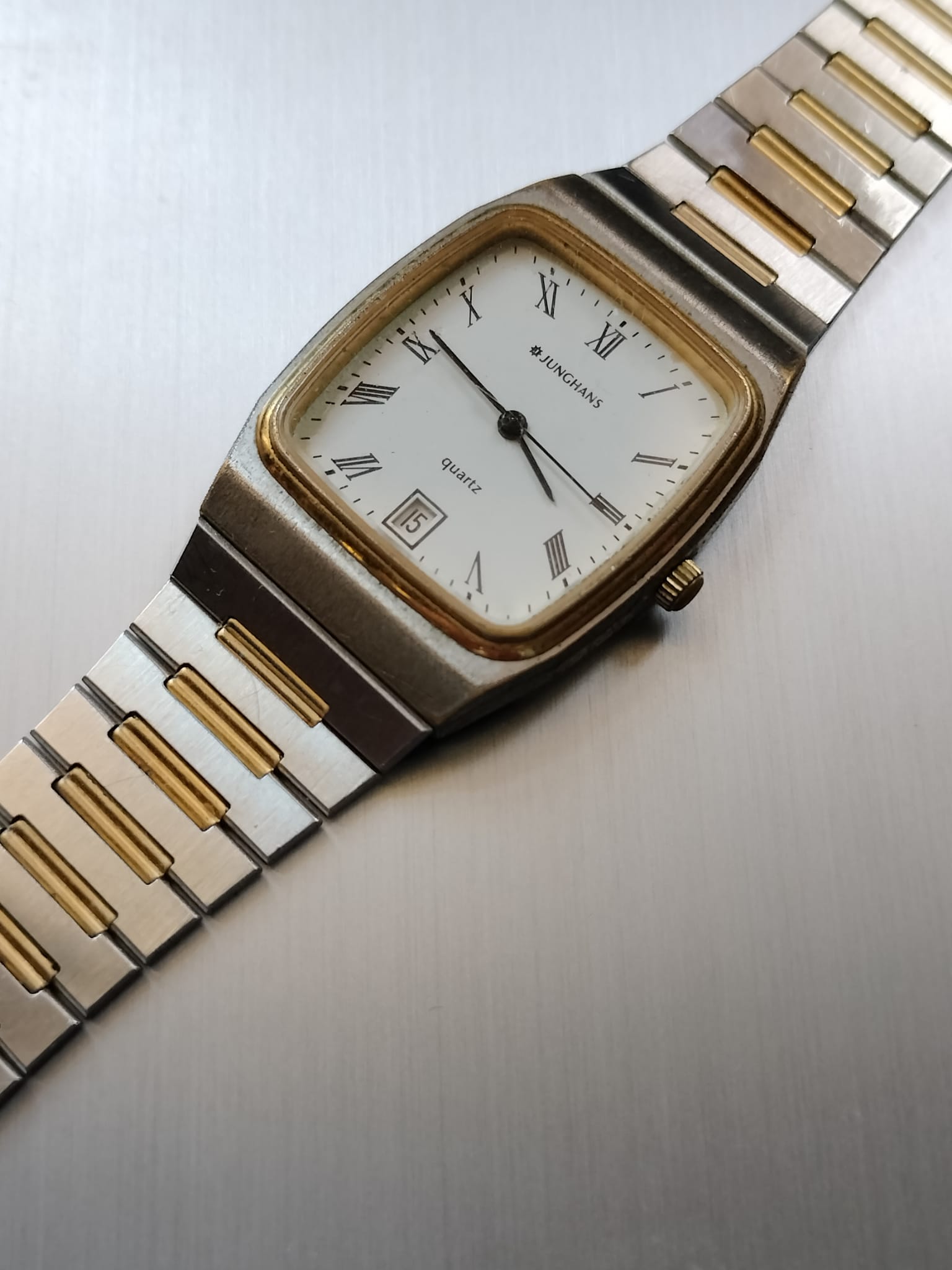
The Junghans Vintage Two-Tone Quartz Dress Watch represents a pivotal era in German horology, specifically the mid-1980s when the brand was transitioning its design language to meet the demands of a globalizing market. This specific model features a distinctive cushion-shaped case with an integrated bracelet design, a hallmarks of late 20th-century luxury sports and dress crossovers. While Junghans is today most famous for its Max Bill Bauhaus minimalist designs, this model showcases the brand's versatility in producing reliable, everyday luxury timepieces that adhered to the prevailing aesthetic of the 'Quartz Crisis' era. The watch features a crisp white dial with traditional Roman numeral indices, offering a formal contrast to the industrial lines of the brushed steel case. Collectors appreciate this model not for its high-end complications, but for its role as a sturdy, reliable representative of German engineering during a time when quartz technology was the gold standard for precision. It serves as an accessible entry point into the world of vintage Junghans, offering a blend of retro-chic aesthetics and practical functionality that remains relevant in modern fashion circles.
Technical Architecture
At the heart of this timepiece is a high-quality German or Swiss-sourced quartz movement, engineered for maximum longevity and minimal maintenance. The case construction utilizes a base of stainless steel with a brushed finish on the hooded lugs and case sides, contrasted by a gold-plated rounded bezel that frames the dial. The dial itself is protected by a flat mineral crystal, which was standard for the era, providing good clarity and scratch resistance. The integrated bracelet is a significant engineering feature, utilizing a 'H-link' style construction with gold-plated center bars that mimic the look of more expensive luxury sport watches of the period. A date window is positioned at 6 o'clock, maintaining the symmetry of the Roman numeral layout. The crown is intentionally small and partially recessed to maintain the sleek silhouette of the cushion case. Water resistance is minimal, designed primarily for protection against light splashes, typical of a dress-oriented timepiece from the mid-80s. The snap-on case back allows for easy battery replacement while ensuring a slim profile on the wrist.
Historical Context
Junghans has been a cornerstone of German watchmaking since its founding in 1861 in Schramberg. By the 1980s, the brand had established itself as a leader in quartz technology, even pioneering the first radio-controlled watches later in the decade. This specific model sits in the transitional period where Junghans was balancing classical European elegance with the efficiency of modern quartz movements. It reflects an era where the 'Genta-esque' influence of integrated bracelets and geometric cases had trickled down from haute horlogerie into the broader luxury market. This model was part of a broader collection intended to provide professional men and women with a reliable, stylish timekeeper that signaled success without the ostentation of solid gold. It represents the resilience of the Black Forest watch industry during a time of intense competition from Japanese manufacturers, proving that German design and quality could compete on a global scale through technological adaptation and refined aesthetics.
Market Intelligence
From an investment perspective, the Junghans Vintage Two-Tone Quartz sits in the 'Value Vintage' category. It does not command the high premiums of the brand's mechanical chronographs or Max Bill editions, but it maintains a steady floor of interest due to the current trend for 80s-style integrated bracelet watches. Demand is driven primarily by enthusiasts looking for affordable vintage pieces from reputable European houses. The secondary market for these models is relatively stable, with supply being moderate; they are not rare, but finding examples in high-grade condition with original bracelets is becoming increasingly difficult. The brand strength of Junghans provides a level of security that generic quartz watches of this era lack. While it is unlikely to experience rapid appreciation, it serves as a 'low-beta' asset in a collection—retaining its value well over time while providing significant 'wrist-time' utility. Liquidity is moderate, with most sales occurring on enthusiast forums and specialized vintage platforms rather than high-end auction houses.
.JPG.JPG)