WatchIQ
Junghans
Junghans Max Bill Automatic
Market Estimate
~$1,150
Specifications
Market Range
Junghans
Junghans Max Bill Automatic
Market Estimate ~ $1,150
Market Range
Specifications
Executive Overview
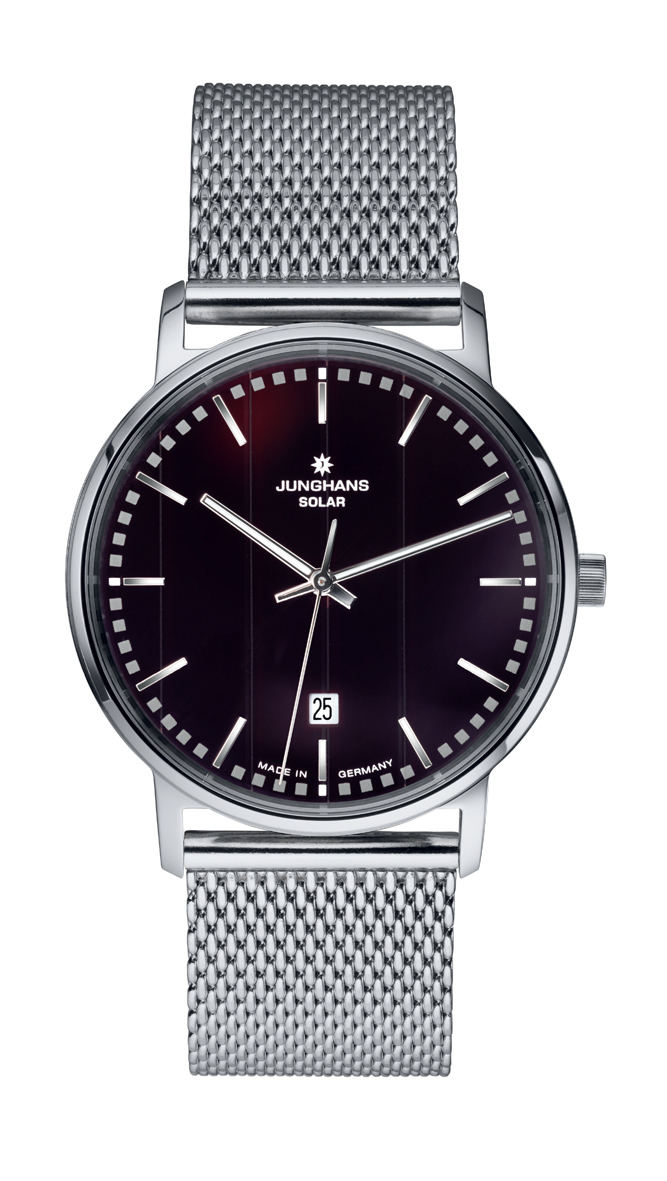
The Junghans Max Bill Automatic represents one of the most significant intersections of industrial design and horological tradition in the modern era. Rooted in the principles of the Bauhaus movement, this timepiece is based on the original 1961 designs of the Swiss architect and artist Max Bill. It serves as a masterclass in the 'form follows function' philosophy, where every line, numeral, and proportion is dictated by the pursuit of clarity and balance. Unlike many luxury watches that rely on excessive ornamentation, the Max Bill Automatic derives its prestige from its restraint. Collectors and design enthusiasts gravitate toward this model because it offers a pure, unadulterated aesthetic that has remained virtually unchanged for over six decades. Its presence on the wrist is subtle yet commanding, signaling a wearer who values intellectual design and German engineering over ostentatious displays of wealth. As an entry point into high-level horological design, it remains an essential pillar of any comprehensive collection, bridging the gap between historical art movements and contemporary everyday utility.
Technical Architecture
The engineering of the Max Bill Automatic is defined by its distinctive 'all-dial' aesthetic, which is achieved through an extremely thin bezel and a highly domed crystal. This specific model features a 38mm stainless steel case that appears larger on the wrist due to the expansive matte silver-plated dial. Under the hood, it is powered by the J800.1 self-winding movement, a robust and reliable caliber based on the ETA 2824-2 or Sellita SW200-1, modified by Junghans to meet their strict accuracy standards. The movement beats at 28,800 vibrations per hour and provides a power reserve of approximately 38 hours. A hallmark of the technical design is the convex dial and curved hands, which follow the radius of the domed plexiglass—or more recently, anti-reflective sapphire crystal—to minimize parallax error and enhance legibility from extreme angles. The dial utilizes Max Bill’s proprietary typography, specifically designed for Junghans, featuring the iconic '4' and 'hooked' numerals. The case construction is splash-resistant, emphasizing its role as a dress-instrument rather than a sports watch, and is traditionally paired with a supple calfskin leather strap.
Historical Context
The relationship between Max Bill and Junghans began in the 1950s when the artist was commissioned to design a kitchen clock. The success of that collaboration led to the 1961 release of the Max Bill wristwatch series, which has since become the definitive example of Bauhaus watchmaking. This model sits within a lineage that helped Junghans transition from being the world’s largest clock manufacturer to a respected name in mechanical wristwatches. While the quartz crisis of the 1970s and 80s shifted the brand's focus, the revival of the Max Bill collection in the 1990s and 2000s solidified its status as a modern icon. It replaced the more cluttered aesthetics of mid-century utility watches with a clean, logical layout that mirrored the architectural teachings of the Dessau school. Today, the Max Bill Automatic resides in the permanent collection of the Museum of Modern Art (MoMA), a testament to its status as a piece of industrial art rather than a mere consumer product. It remains the most commercially successful and culturally significant line in the Junghans portfolio.
Market Intelligence
From an investment and market perspective, the Junghans Max Bill Automatic is characterized by high liquidity and exceptional price stability. While it does not experience the speculative volatility seen in stainless steel professional models from major Swiss houses, it maintains a very high 'value retention' score within its price bracket. The secondary market for the Max Bill is extremely active; it is a 'staple' asset that sells quickly due to its universal appeal across both watch enthusiasts and the broader design community. Supply is consistent, but demand remains robust, preventing the steep depreciation typically seen in entry-level luxury watches. Its brand strength is particularly concentrated in Europe and North America among the 'creative class' and collectors who prioritize provenance. As an asset, it is low-risk; it is unlikely to skyrocket in value, but it is equally unlikely to become obsolete or undesirable. The consistent design language means that older references hold their value well against newer iterations, making it a safe harbor for capital in the sub-$2,000 category.
.JPG.JPG)