WatchIQ
Junghans
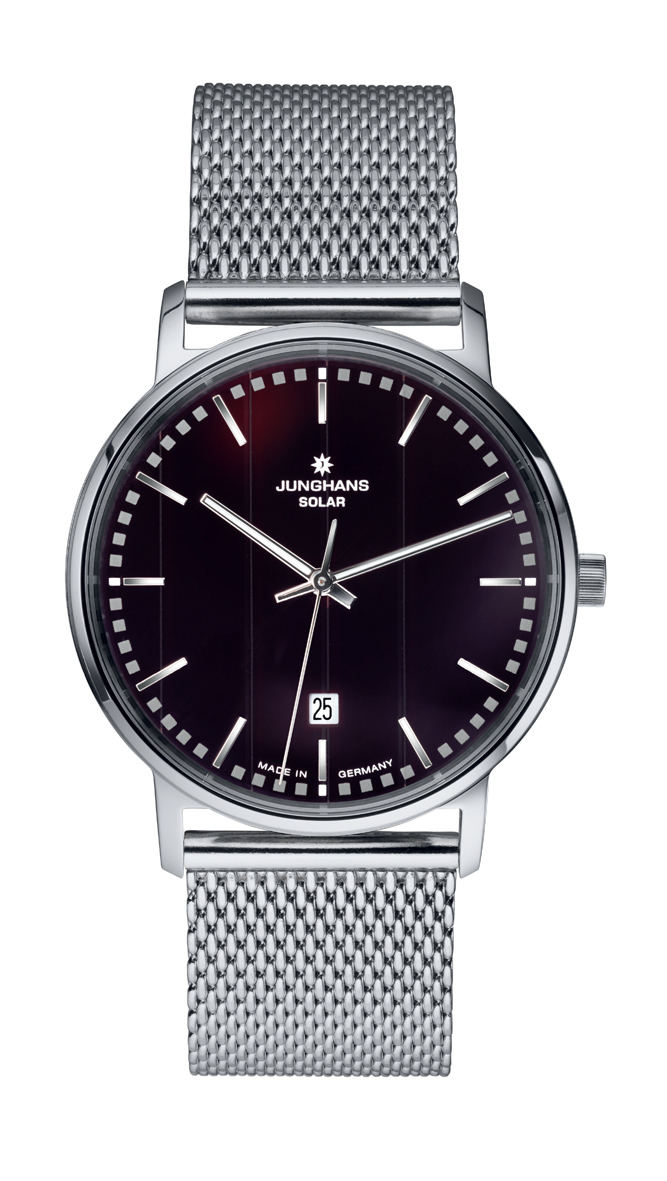
Junghans 1972 Solar Quartz (Milanaise Bracelet)
Market Estimate
~$550
Specifications
Market Range
Junghans
Junghans 1972 Solar Quartz (Milanaise Bracelet)
Market Estimate ~ $550
Market Range
Specifications
Executive Overview
The Junghans 1972 Solar represents a sophisticated bridge between the brand's storied Olympic timing heritage and modern sustainable micro-engineering. While Junghans is often synonymous with the minimalist Bauhaus aesthetic of Max Bill, the 1972 collection pivots toward a more technical, sporty, and robust design language. This specific model features a striking dark solar-cell dial that efficiently converts light into electrical energy, eliminating the need for traditional battery changes and aligning with the contemporary collector's preference for eco-conscious luxury. The watch is defined by its clean lines, high-contrast markers, and the distinctive 'Made in Germany' pedigree that signifies precision and reliability. It exists as a testament to Junghans' historical role as the official timekeeper of the 1972 Munich Olympic Games, capturing the spirit of that era through a lens of 21st-century innovation. For the enthusiast, this piece offers an entry point into high-quality German horology without the maintenance overhead of a mechanical movement, packaged in a versatile aesthetic that transitions seamlessly from casual to formal environments.
Technical Architecture
At the core of this timepiece is the J622.50 solar-powered quartz movement, a caliber designed for high autonomy and endurance. The dial serves a dual purpose: it is a visually deep, aesthetically pleasing surface and a translucent substrate that allows light to reach the solar cells positioned beneath. This architecture provides a power reserve of up to four months when fully charged, ensuring the watch remains operational even after extended periods in darkness. The case is constructed from high-grade 316L stainless steel, polished to a mirror finish that highlights the sharp, angular lug design characteristic of the 1972 series. Protection is provided by a flat sapphire crystal, offering superior scratch resistance compared to the acrylic often found in the brand's heritage lines. The watch is paired with a finely woven stainless steel milanaise bracelet, which provides a flexible, breathable fit and a vintage-inspired texture. Water resistance is typically rated at 10 bar (100 meters), making it significantly more robust than the dress-oriented Max Bill models and suitable for daily active wear.
Historical Context
Junghans occupies a unique position in German industrial history, once being the largest clock manufacturer in the world. The '1972' moniker is a direct reference to the year Junghans served as the official timekeeper for the Games of the XX Olympiad in Munich. This period was a turning point for the brand, as they introduced several pioneering quartz and electronic timing technologies that revolutionized sports measurement. The modern 1972 collection was launched to celebrate these milestones, moving away from the 1950s minimalism of the Max Bill era and into the bold, technical aesthetics of the 1970s. This solar variant is a logical evolution of that history, combining the brand's historic mastery of quartz technology with modern solar charging capabilities. It reflects a broader trend within the German watch industry to prioritize 'Form follows function' while embracing sustainable energy solutions. By maintaining the production in Schramberg, Germany, Junghans ensures that even their quartz and solar models adhere to the strict quality standards that have defined the brand for over 160 years.
Market Intelligence
From a market perspective, the Junghans 1972 Solar is positioned as a high-value, accessible asset within the German horological landscape. Unlike the volatile secondary market for luxury Swiss steel sports watches, Junghans maintains a stable and predictable price floor, making it a 'safe' purchase for collectors looking for quality without high financial risk. The brand strength of Junghans is currently on an upward trajectory, fueled by a growing global appreciation for German manufacturing and minimalist design. While this model is not a high-growth investment vehicle in the way a limited edition mechanical piece might be, it boasts excellent value retention relative to its retail price. The secondary market liquidity is high due to the brand's broad appeal and the practical nature of the solar movement, which attracts both enthusiasts and pragmatic buyers. Supply is consistent, but the 'Made in Germany' branding provides a competitive edge over mass-market solar alternatives from Japanese manufacturers. It is a strategic acquisition for those seeking to diversify a collection with a reliable, historical, and technologically modern timepiece.
.JPG.JPG)