WatchIQ

Cartier
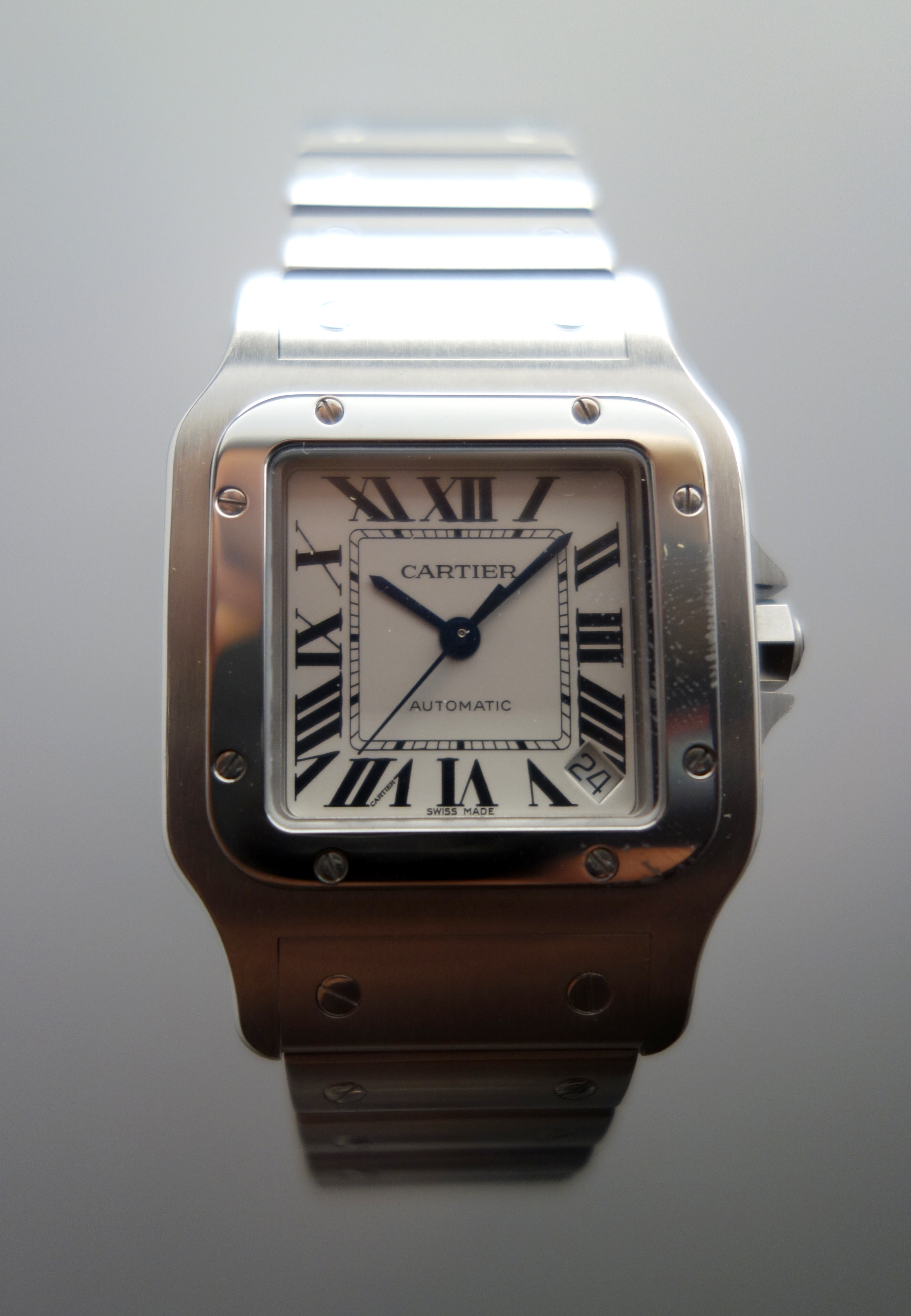
Cartier Santos Galbée W20060D6
Market Estimate
~$3,800
Specifications
Market Range
Cartier
Cartier Santos Galbée W20060D6
Market Estimate ~ $3,800
Market Range
Specifications
Executive Overview
The Cartier Santos Galbée represents a pivotal chapter in the evolution of the world's first purpose-built pilot's watch. This specific iteration, characterized by its curved case and integrated bracelet, was designed to follow the natural contour of the wrist more fluidly than the original 1904 design or the 1970s Santos Carrée. It is a masterclass in industrial elegance, blending the rugged utility of exposed screws with the refined Roman numeral dial that has defined Cartier horology for over a century. Collectors value the Santos Galbée because it bridges the gap between vintage charm and modern reliability. It occupies a unique space in the market: it is small enough to be considered a classic dress watch by modern standards, yet its architectural presence and steel construction make it an ideal daily companion. The Galbée is often cited by enthusiasts as the 'perfect' Santos due to its proportions and the way the lugs flow seamlessly into the bracelet links. It is a watch that ignores fleeting trends, maintaining a consistent aesthetic that is as relevant today as it was during the height of the neo-vintage era. For the discerning collector, it represents an entry point into high-tier horology that carries immense historical weight without the fragility of a true antique.
Technical Architecture
The technical blueprint of the Santos Galbée is centered around the 'Galbée' (curved) geometry of the stainless steel case. Unlike the flat-back predecessors, the case back and lugs are ergonomically arched to ensure a low center of gravity and a flush fit against the forearm. The bezel is secured by eight functional screws, a design language that extends through the entire length of the integrated steel bracelet. This bracelet features the signature 'Santos' screws on every link, creating a cohesive visual identity from the head of the watch to the hidden deployment clasp. Under the hood, this model typically utilizes a high-precision Swiss quartz movement, favored for its slim profile which allows the case to remain under 8mm in thickness. The dial is a classic silvered opaline with black oxidized steel sword-shaped hands. The railroad minute track—a Cartier signature—frames the bold Roman numerals, with the 'secret signature' often tucked into the V of the VII or X markers. The sapphire crystal is slightly domed to match the curvature of the bezel, and the heptagonal crown is set with a synthetic blue spinel cabochon, providing both a tactile grip and the unmistakable Cartier flourish. Water resistance is rated for daily splashes, though its primary engineering focus is durability and aesthetic longevity.
Historical Context
The lineage of this timepiece dates back to 1904, when Louis Cartier created a wrist-worn watch for his friend, the Brazilian aviator Alberto Santos-Dumont, who needed to check the time while flying without releasing the controls of his aircraft. This act effectively birthed the men's wristwatch category. While the Santos evolved through many iterations, the 1970s saw the introduction of the Santos Carrée in response to the luxury steel sports watch trend. However, it was the 1987 launch of the Santos Galbée that refined the silhouette into the modern icon we recognize today. The Galbée was Cartier’s answer to the demand for more ergonomic luxury; by curving the case, they transformed a square, rigid instrument into a piece of wearable sculpture. This specific generation, often referred to as the '90s and early 2000s era, solidified the Santos as a versatile unisex staple. It survived the quartz crisis by embracing high-quality electronic movements, allowing Cartier to maintain a slim, elegant profile that mechanical movements of the time struggled to achieve in a square format. It stands as a testament to Cartier's ability to modernize a century-old design without losing the DNA that made it a legend in the first place.
Market Intelligence
The market for the Cartier Santos Galbée has seen a significant resurgence over the last five years, driven by a broader collector shift toward neo-vintage proportions and 'stealth luxury.' As modern watches have trended larger, the mid-size Galbée has become a darling of the secondary market for those seeking classicism. Demand for stainless steel Cartier models currently outpaces supply, particularly for examples in crisp condition with tight bracelets. From an investment perspective, the Santos Galbée exhibits low volatility and high value retention; it is widely considered a 'safe harbor' asset in horology. Unlike high-complication pieces that may fluctuate with economic cycles, the Santos is a foundational watch that appeals to both seasoned investors and first-time luxury buyers. Liquidity is exceptionally high, as the model is instantly recognizable and has a global audience. The brand strength of Cartier currently sits at an all-time high, with the Maison consistently ranking as one of the top three luxury watch brands by market share globally. While it may not see the speculative spikes of certain steel chronographs, its steady upward trajectory makes it a core component of a diversified watch portfolio.