WatchIQ
Bulova
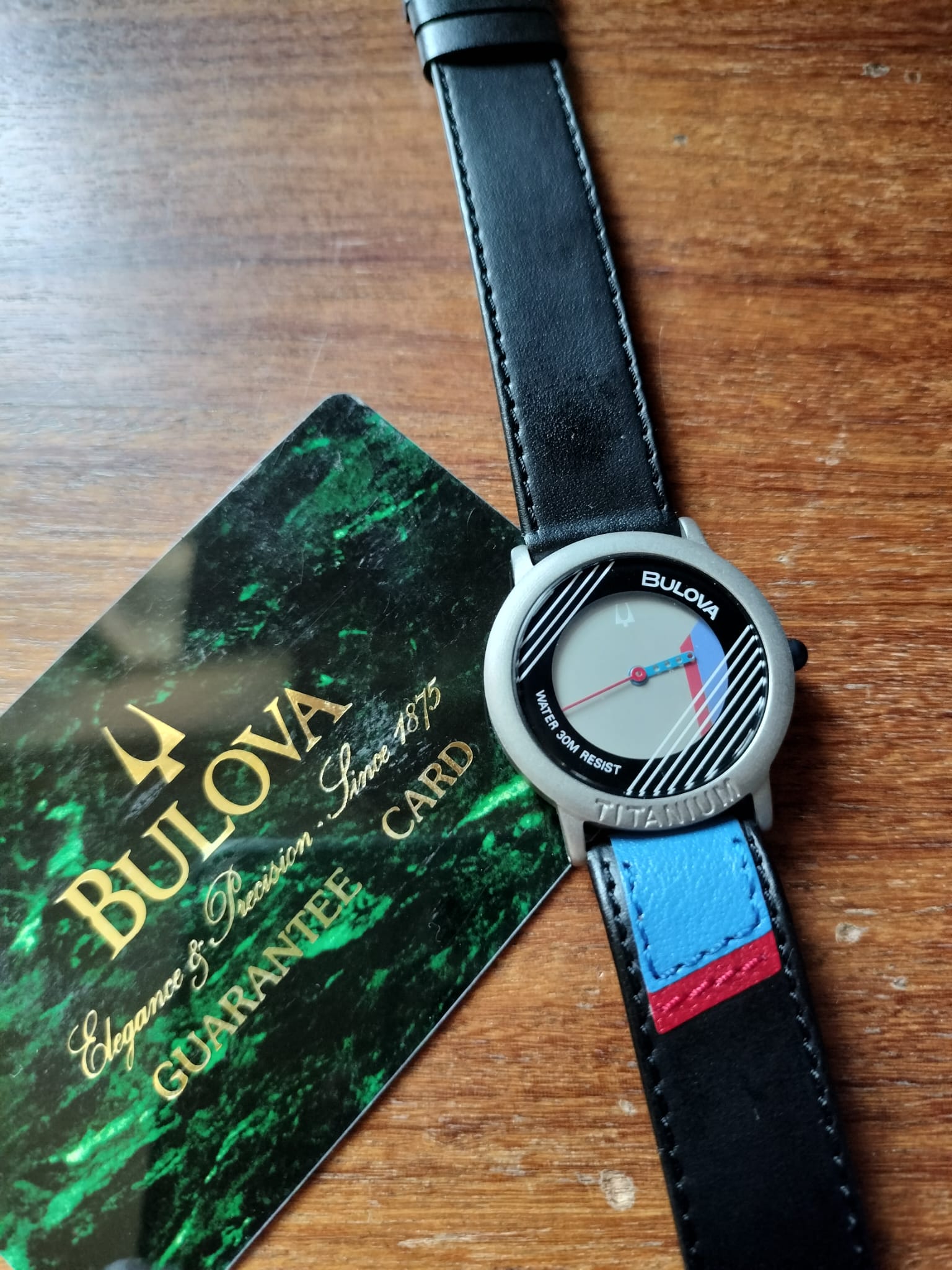
Bulova Titanium Sport 'Pop Art' Edition
Market Estimate
~$250
Specifications
Market Range
Bulova
Bulova Titanium Sport 'Pop Art' Edition
Market Estimate ~ $250
Market Range
Specifications
Executive Overview
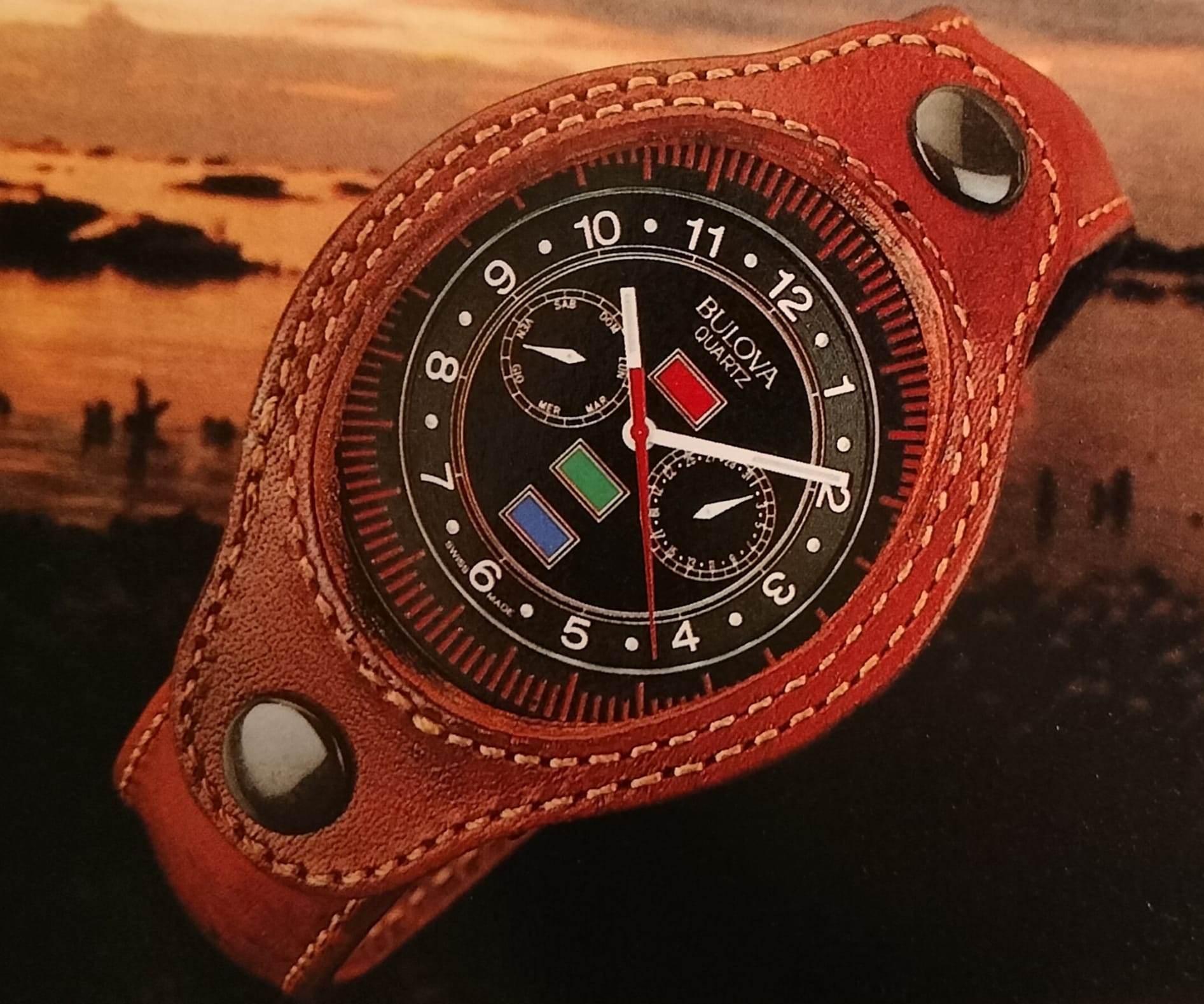
The Bulova Titanium Sport 'Pop Art' edition is a compelling artifact from a transformative era in horological design. Emerging in the mid-1990s, this model represents Bulova’s experimentation with avant-garde aesthetics and lightweight materials, departing from the brand's traditional dress watch heritage. It features a distinctive asymmetrical dial layout characterized by bold geometric lines and a vibrant primary color palette of blue and red, reminiscent of the Memphis Group design movement. This specific reference is a testament to the period when titanium was transitioning from a specialized aerospace material to a mainstream luxury watchmaking staple. Collectors value this piece not for high-complication mechanical prowess, but for its unique visual identity and its role as a 'neo-vintage' design statement. It serves as a reminder of Bulova's willingness to pivot toward a younger, more design-conscious demographic during the late 20th century. The inclusion of the original guarantee card and the color-matched integrated strap significantly enhances its appeal to those seeking complete sets from this specific design epoch. It remains a conversation piece that captures the intersection of industrial minimalism and 90s graphic maximalism.
Technical Architecture
At the core of this timepiece is a high-reliability Japanese quartz movement, selected for its thinness and shock resistance, which allows for the watch's slim profile. The case is constructed from sandblasted titanium, a material prized for being approximately 40% lighter than stainless steel while offering superior corrosion resistance and hypoallergenic properties. The bezel is uniquely engraved with the 'TITANIUM' designation at the 6 o'clock position, serving as both a branding element and a tactile design feature. The dial is protected by a flush-mounted mineral crystal, surrounding a multi-layered graphical interface. The handset is particularly noteworthy, featuring a truncated blue hour hand and a needle-thin red seconds hand that provides high contrast against the grey and black dial sectors. The watch is rated for 30 meters (3 ATM) of water resistance, making it suitable for daily splash-proof wear but not intended for submersion. The integrated leather strap is a crucial component of the architecture, featuring custom blue and red leather inserts that continue the dial's color story, secured by a standard pin buckle. The case back is typically a snap-on or screw-down variety, maintaining the watch's lightweight and ergonomic footprint.
Historical Context
Bulova, founded in 1875, has a history defined by innovation—from the first fully standardized production of watches to the electronic revolution of the Accutron. By the 1990s, the brand was navigating a competitive landscape dominated by bold, fashion-forward designs from brands like Swatch and TAG Heuer. This Titanium Sport model was part of a broader move to modernize the brand's image. It utilized titanium, which at the time was still considered a 'high-tech' material following its introduction to the watch world by IWC and Porsche Design in the 1980s. This model reflects the transition from the austerity of 80s luxury to the playful, graphic-heavy styles of the mid-90s. It stands as a bridge between Bulova's mid-century dominance and its modern era under the Citizen Group. While many watches from this era have been lost to time or discarded, the survival of examples with original documentation highlights a niche but dedicated interest in Bulova’s 'experimental' decade. It represents a moment when the brand was unafraid to utilize bold primary colors and asymmetrical layouts, challenging the conservative norms of the American-founded horological giant.
Market Intelligence
From an investment perspective, the Bulova Titanium Sport is classified as a 'niche collectible.' It does not command the high-value premiums of mechanical chronographs, but it occupies a growing 'neo-vintage' segment that appeals to younger collectors and design enthusiasts. Market demand for 90s-era titanium watches is on an upward trajectory as enthusiasts seek out affordable alternatives to the highly inflated integrated-bracelet steel market. The secondary market behavior for this model shows stable value retention, particularly for examples that retain their original color-blocked straps and paperwork. Supply is relatively thin due to the age and the specific nature of the design, though it is not considered 'rare' in the sense of limited production runs. The brand strength of Bulova provides a floor for the value, ensuring liquidity among entry-level collectors. Long-term value retention is expected to remain steady, with slight appreciation possible as 90s design continue to cycle back into fashion. The primary risk factor is the condition of the proprietary strap; because it is integrated and features specific color-work, a degraded strap can significantly reduce the market price, as finding an OEM replacement is increasingly difficult.