WatchIQ
Bulova
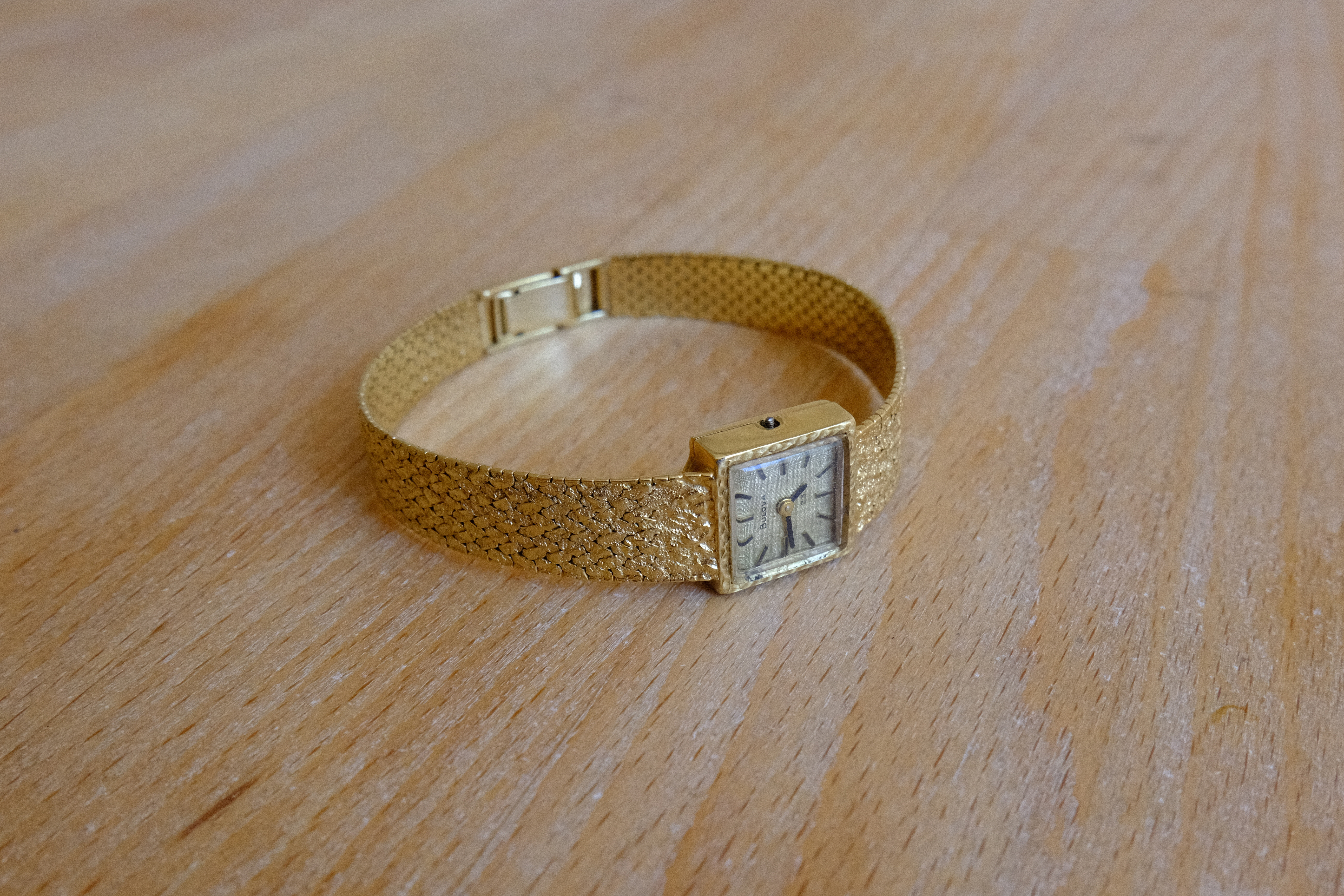
Bulova Cocktail Watch with Bark-Finish Integrated Bracelet
Market Estimate
~$350
Specifications
Market Range
Bulova
Bulova Cocktail Watch with Bark-Finish Integrated Bracelet
Market Estimate ~ $350
Market Range
Specifications
Executive Overview
This vintage Bulova cocktail watch represents a pinnacle of mid-century feminine design, bridging the gap between functional horology and high-fashion jewelry. During the late 1960s, Bulova dominated the American market by offering sophisticated aesthetics that mirrored the avant-garde trends of European houses like Piaget and Chopard, but at a more accessible luxury price point. This specific model features a striking square case integrated seamlessly into a 'bark-finish' mesh bracelet, a texture that was highly coveted during this era for its organic, light-catching properties. For the modern collector, this piece serves as a testament to Bulova's historical versatility. It embodies the 'cocktail' era where watches were intended to be worn as evening accessories, discreet yet opulent. Its existence reflects a time when mechanical miniaturization was at its peak, allowing for incredibly small movements to fit within slender, elegant silhouettes. Collectors value these pieces not just for their mechanical merit, but for their ability to evoke the glamour of the 1960s jet-set lifestyle. While many such watches were lost to gold-scrapping cycles over the decades, well-preserved examples with original integrated bracelets remain highly sought after by vintage enthusiasts who appreciate the 'jewelry-first' philosophy of mid-century watchmaking.
Technical Architecture
The heart of this timepiece is a manual-wind caliber, likely from the Bulova 5 or 6 series, which were renowned for their diminutive size and reliability. These movements were engineered to provide a 30-40 hour power reserve despite their tiny footprint, requiring precise tolerances and high-grade hairsprings. The case construction is typically a two-piece design, featuring a snap-back case for movement access. The most distinctive technical element is the integrated bracelet, which is not merely attached by lugs but is structurally part of the case design, ensuring a continuous flow of texture from the wrist to the dial. The 'bark' or 'nugget' finish is achieved through a specialized engraving or stamping process on the gold-filled or plated base, creating a multi-faceted surface that masks scratches while providing a unique tactile experience. The dial features a linen or sunray texture, complemented by applied baton indices, protected by a faceted or raised acrylic crystal that adds depth to the diminutive face. Given the era and style, the watch lacks significant water resistance, as it was designed for social environments rather than sporting activities, focusing instead on the integrity of the gold finish and the slimness of the profile.
Historical Context
Founded in 1875 by Joseph Bulova, the brand had established itself by the 1960s as a leader in both innovation—with the Accutron—and traditional elegance. This model sits within the latter category, reflecting the transition from the strict utility of the 1950s to the more expressive, textured designs of the late 1960s. This period saw a shift toward 'total look' watches, where the strap and case were designed as a singular aesthetic unit. This specific design language was a response to the growing influence of brutalism and organic modernism in architecture and jewelry. Bulova’s ability to mass-produce these intricate textures allowed the brand to capture the burgeoning middle-class demand for luxury-style accessories. This model specifically predates the 'Quartz Crisis' impact, representing one of the final generations where mechanical manual-wind movements were the standard for women's dress watches before the industry pivoted toward electronic movements. It stands as a historical marker of American horological dominance during the mid-20th century, showcasing the brand's ability to blend Swiss-influenced mechanical movements with bold, American-market jewelry trends.
Market Intelligence
In the current secondary market, vintage Bulova cocktail watches occupy a unique niche. While they do not command the astronomical prices of solid gold Patek Philippe or Rolex equivalents, they offer exceptional value-for-money for collectors entering the vintage market. The demand is currently driven by a resurgence in 'vintage jewelry' aesthetics and the trend of stacking watches with gold bracelets. Market behavior shows that pieces with intact, original integrated bracelets—like the one pictured—command a 30-40% premium over those with replaced leather straps, as the integration is central to the design's integrity. Supply dynamics are tightening for high-quality examples; many were poorly maintained or had their gold content harvested during periods of high bullion prices. As a financial asset, this model offers high stability with low volatility, though liquidity is moderate, typically moving fastest on specialized vintage platforms or at boutique auctions. Its long-term value retention is bolstered by the brand's heritage and the growing appreciation for mechanical women's watches, which were historically overlooked by the male-centric collector community but are now seeing a significant uptick in interest.