WatchIQ
Bulova
Bulova Ambassador Automatic Micro-Rotor
Market Estimate
~$650
Specifications
Market Range
Bulova
Bulova Ambassador Automatic Micro-Rotor
Market Estimate ~ $650
Market Range
Specifications
Executive Overview
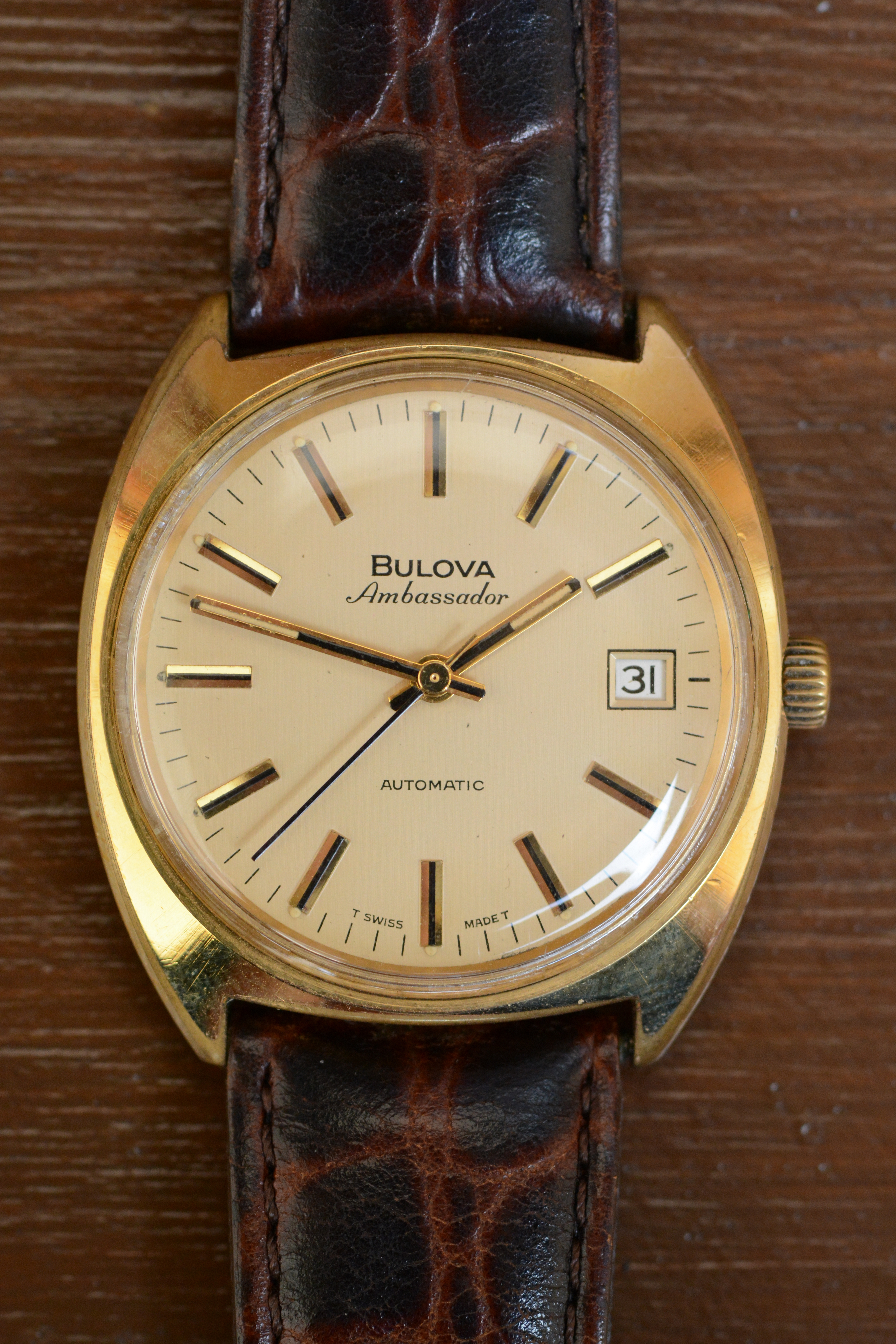
The Bulova Ambassador represents a sophisticated era of mid-century horology where the brand competed directly with the highest tiers of Swiss manufacturing. This specific iteration, characterized by its elegant cushion-shaped case and refined champagne dial, is a masterclass in 1960s executive style. While Bulova is often associated with the electronic Accutron movement, the Ambassador line was the vessel for their most prestigious mechanical achievements. It exists as a testament to a time when Bulova utilized high-grade Swiss calibers to offer a luxury experience that rivaled brands like Universal Genève. Collectors prize this model not just for its aesthetic 'Mad Men' era charm, but for the horological sophistication hidden beneath the dial. The Ambassador was positioned as the flagship of Bulova’s mechanical dress watch collection, aimed at the discerning professional who demanded slimness, reliability, and prestige. Its presence on the wrist is understated yet commanding, featuring a design language that has aged exceptionally well, making it a staple for vintage enthusiasts seeking high horology value without the entry price of more marketed Swiss giants.
Technical Architecture
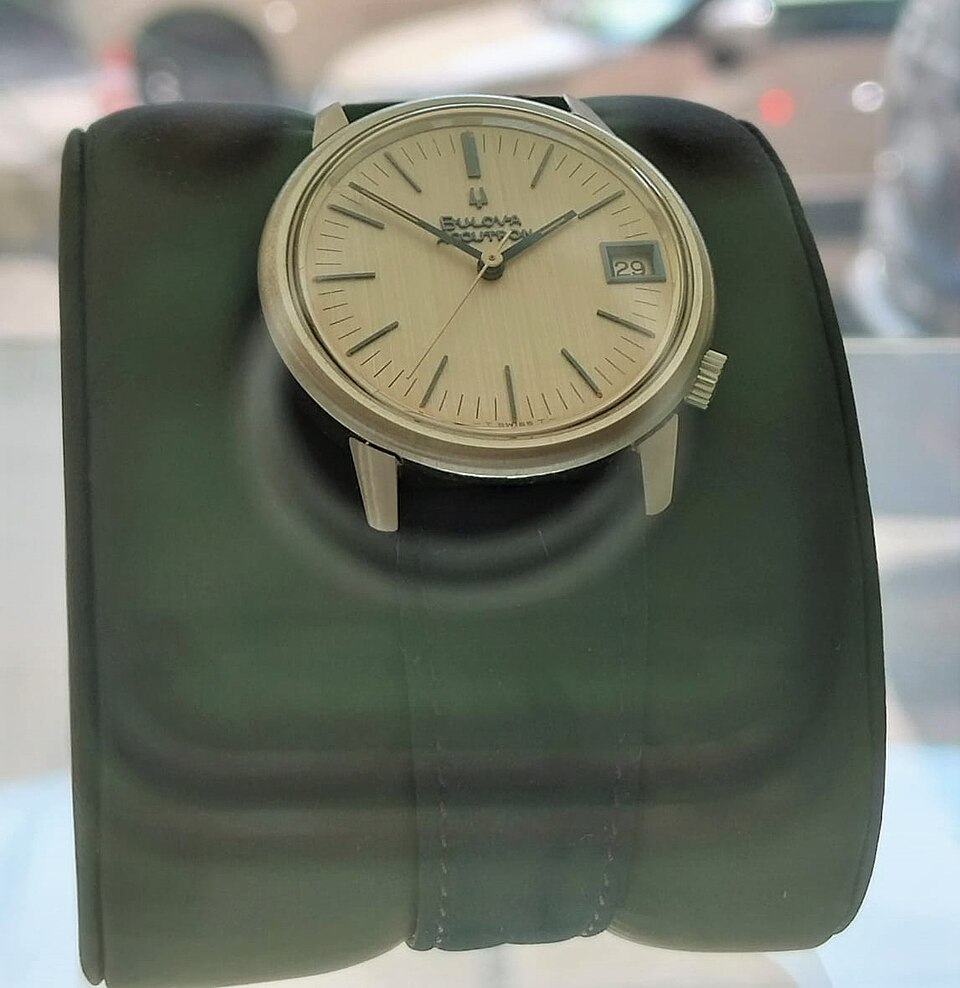
The engineering heart of this Bulova Ambassador is its standout feature: the Buren-based micro-rotor automatic movement (likely a Caliber 1280 or similar). At a time when most automatic watches relied on a bulky central rotor that added significant thickness, the micro-rotor was integrated into the movement plane, allowing for an incredibly slim profile. The case is a robust 'C-shape' or cushion design, typically finished in heavy gold electroplating or 14k gold, measuring approximately 35mm to 37mm in diameter. The dial features applied baton indices with black inserts for enhanced legibility, complemented by a discreet date window at the 3 o'clock position. The crystal is a high-domed acrylic, which provides the warm distortions characteristic of the period. The 'T Swiss Made T' signature at the bottom of the dial indicates the use of tritium for luminosity, a standard for high-end watches of the late 1960s. The lug design is integrated seamlessly into the case architecture, providing a lug-to-lug distance that ensures the watch wears larger and flatter than its dimensions suggest, optimizing it for formal attire.
Historical Context
Introduced during the golden age of mechanical watchmaking, the Bulova Ambassador was the brand's answer to the thinness race of the 1960s. Following Bulova's acquisition of the Universal Genève distribution rights and their close relationship with Buren, they were able to implement the revolutionary micro-rotor technology. This specific model follows the design evolution from the earlier round Ambassadors into the more substantial, geometric forms of the late 60s. It represents the pinnacle of Bulova's Swiss-made mechanical production before the 'Quartz Crisis' shifted the brand's focus entirely toward electronic and quartz movements. Historically, the Ambassador line served as a bridge between traditional craftsmanship and modern innovation, often being gifted to diplomats and high-ranking executives, hence the 'Ambassador' nomenclature. It stands as a relic of an era when Bulova was a truly global powerhouse with significant manufacturing footprints in both the United States and Biel, Switzerland, successfully blending American marketing flair with Swiss technical precision.
Market Intelligence
From an investment and collection standpoint, the Bulova Ambassador with a micro-rotor movement is currently undervalued but seeing a steady climb in interest. While mass-market vintage Bulovas are common, the micro-rotor variants are significantly more desirable to serious horologists. Demand is driven by the 'vintage revival' trend and a growing appreciation for movements that offer something beyond the standard ETA or Valjoux architectures. The secondary market shows high liquidity for well-preserved examples, particularly those with clean dials and minimal wear to the gold plating. Supply is tightening as collectors realize these movements are shared with much more expensive Universal Genève Polerouters, leading to a 'value-alternative' status that supports long-term price appreciation. Brand strength for Bulova remains high due to its historical significance, though the mechanical models are a niche within the brand's broader history. Investors should look for original crowns and unpolished cases, as these factors drastically affect the premium in the current enthusiast market.